How to Get Hard Water Spots Off Your Windows in Southeast Idaho
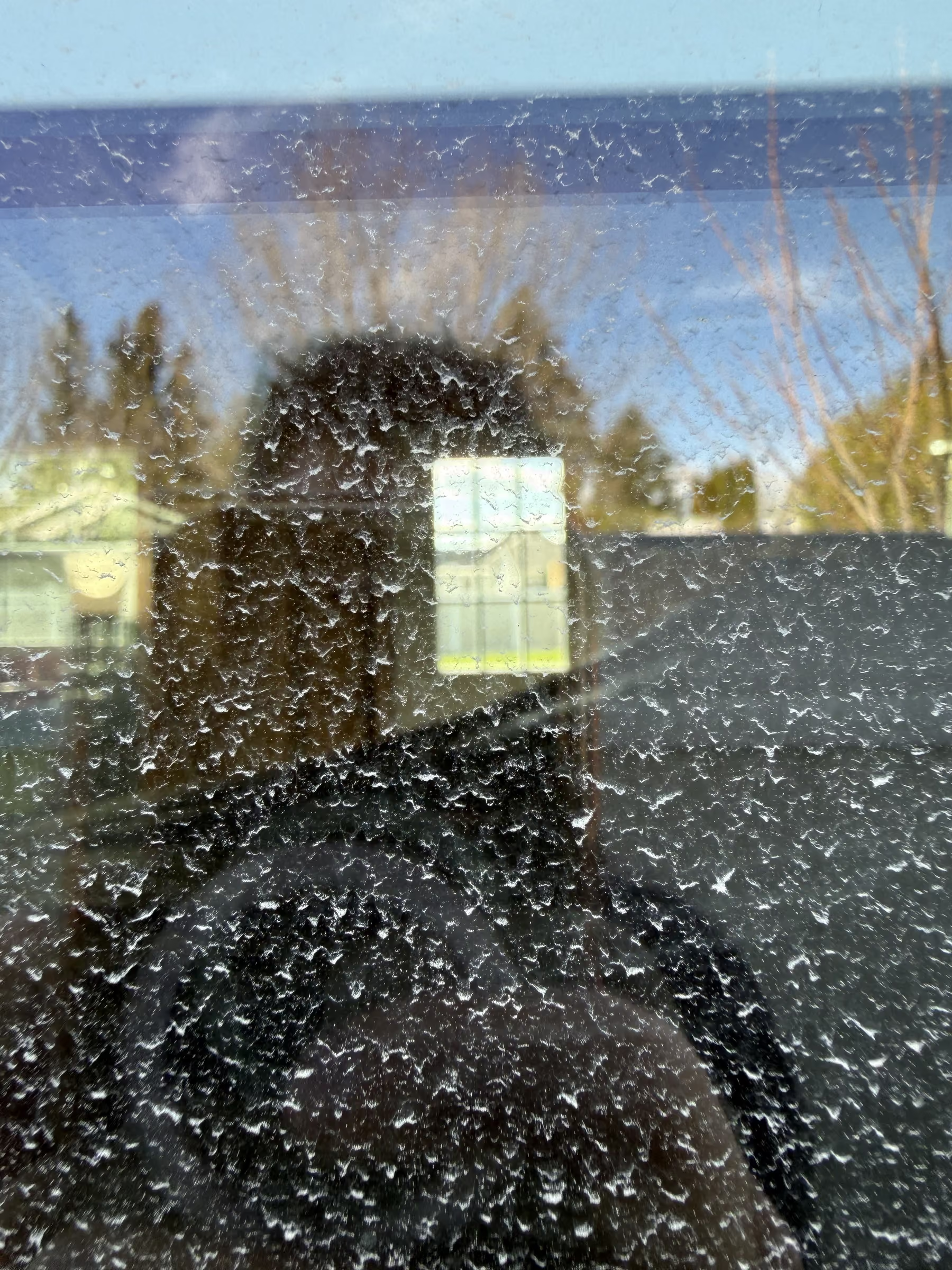
Run your sprinklers all summer and your windows keep a record of it. Every cycle that clips the glass dries in the high-desert sun and leaves a faint ring behind. By August those rings have stacked into a cloudy band across the bottom third of the pane, and no amount of glass cleaner touches it.
That band is not dirt. It is mineral. Southeast Idaho runs on hard water, and the calcium and magnesium dissolved in it stay behind on the glass long after the water itself has evaporated. Wipe it with a rag and you are polishing the surface of the problem, not removing it.
Left alone, it does not stay a surface problem for long. Here is what hard water actually does to a window, and what it takes to get it back off.
Why sprinkler overspray leaves spots a rag will not touch
Hard water is water with a lot of dissolved minerals in it, and most of Southeast Idaho has plenty. When a droplet lands on glass and the sun bakes it dry, the water leaves and the minerals do not. Each drop welds a tiny ring of calcium and magnesium to the surface.
Lawn sprinklers are the main offender. A head that arcs a little too far throws a fine spray across the lower windows a few times a day, all season. Rotor and drip heads near the foundation do the same to basement and main-floor glass. Add the farm dust that blows across the valley and settles into the wet film, and you get a haze that bonds harder every hot afternoon.
A rag and a bottle of cleaner cannot lift that. Household glass cleaner is built for fingerprints and grime, not bonded mineral. It wets the deposit, smears it, and dries right back down, which is why the spots look gone while the glass is wet and come back the second it dries. Removing them for good is a big part of what our window washing service is built to do.
Ignore it and the glass starts to etch
Mineral spotting is not only ugly. Given enough time and heat, the deposits begin to eat into the glass itself. They hold moisture against the surface, the sun bakes it, and the cycle slowly pits the top layer. That is etching, and etching is permanent. Once the glass is damaged, no cleaner brings it back, because there is nothing left to clean off. The haze is now part of the pane.
The window facing your busiest sprinkler zone is usually the first to go. Catch the deposits while they are still sitting on top of the glass and they come off. Wait until they have etched in and the only fix is new glass.
Signs the spots are turning into etching
- Cloudiness that stays after the glass is fully dry
- A faint sandpaper texture when you run a fingertip across it
- A rainbow sheen that shows up in low, angled light
- Damage concentrated on the side that faces the sprinklers
If you are seeing the first two together, the clock is running. Older homes on well water across Bonneville County tend to show it early, and the newer developments around Idaho Falls are not far behind, where young lawns get watered hard and the overspray has nowhere to go but the siding and the glass.
What actually gets hard water spots off
Light spotting sometimes gives way to a mild acidic cleaner and a lot of patience. The heavier, older buildup needs a dedicated mineral treatment made for glass, worked into the deposit and often taken in more than one pass. Stubborn panes get a fine polishing step on top of that. None of it is a product from under your kitchen sink.
It is also easy to make things worse. Razor blades and scrub pads scratch glass, especially the tempered panes in newer windows. Abrasive powders leave their own marks. Even straight vinegar, the usual internet advice, only touches the lightest cases and does nothing to a season of baked-on overspray. When the deposits have been building for years, the safe move is to bring in someone who does this every day and has the right treatments and the technique to use them without trading spots for scratches.
Mineral removal is slow, deliberate work, and it goes far better on deposits that have not had years to bake in. Staying ahead of the buildup is easier than fixing it, which really comes down to how often you clean your windows out here. Hard water is the thing we get asked about most, and there is more on it in our FAQ.
If your windows have a haze that will not wipe away, do not keep scrubbing at it. Have it looked at before it etches. Call Wake Window Cleaning at (208) 604-2307 or get in touch for a free estimate.